- Content version
- 1.0
- Last scientific review
- مايو 2026
What is middle ear fluid?
This is fluid collecting behind the eardrum without acute infection or pain. Sometimes called "glue ear," it often follows a cold or ear infection.
Most cases resolve on their own within 3 months.
How would I notice it in my child?
It usually doesn't cause pain, so parents may not notice it. Signs include:
- Turning up the TV volume or not responding when called
- Frequently asking for things to be repeated
- Delayed or unclear speech
- Reduced attention or poor school performance
- Poor balance or frequent falling
- Recurrent ear infections
What are the risk factors?
- Frequent colds and daycare attendance
- Enlarged adenoids
- Allergic rhinitis
- Smoke exposure
- Down syndrome and cleft palate
How is it diagnosed?
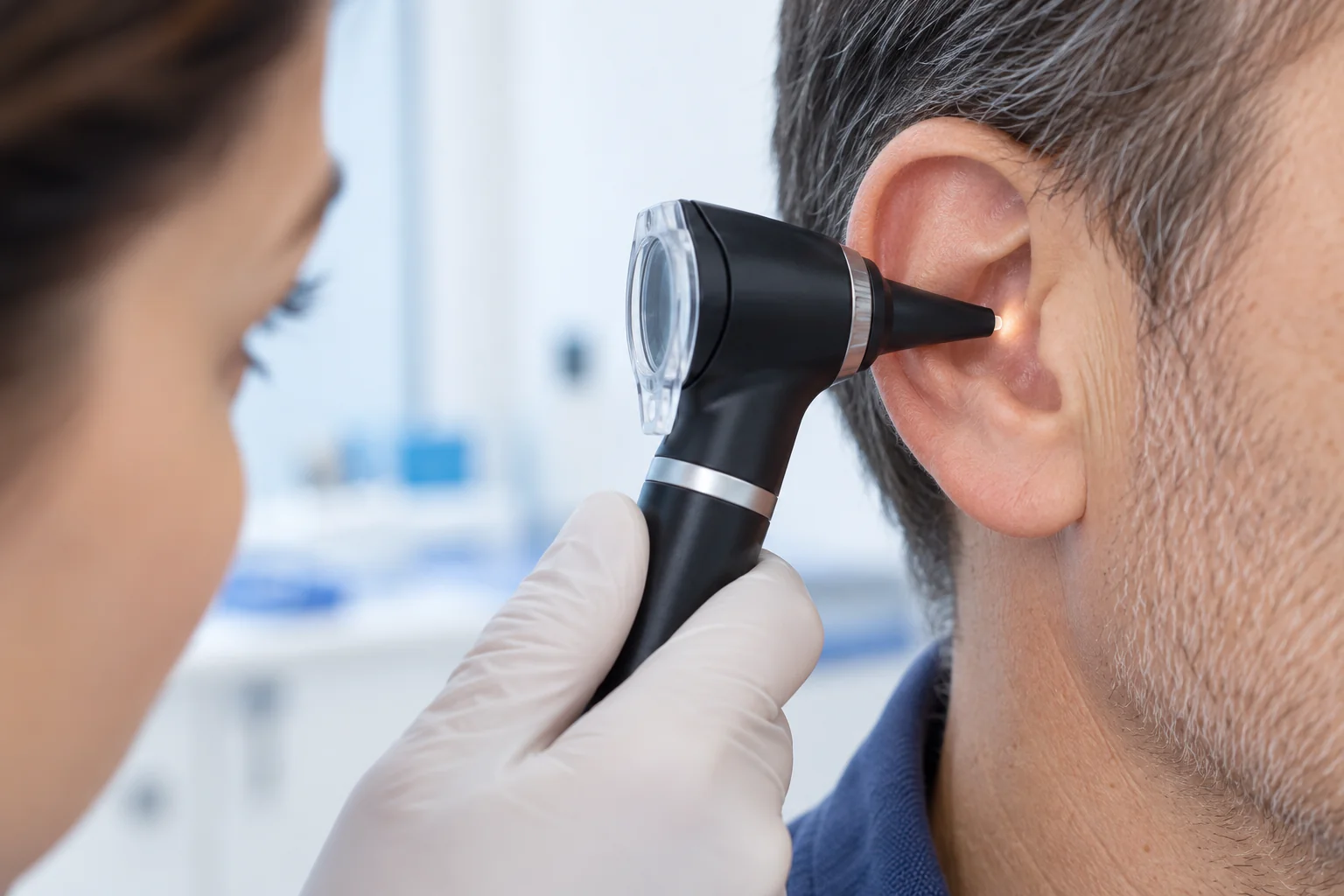
- Examining the eardrum with an otoscope
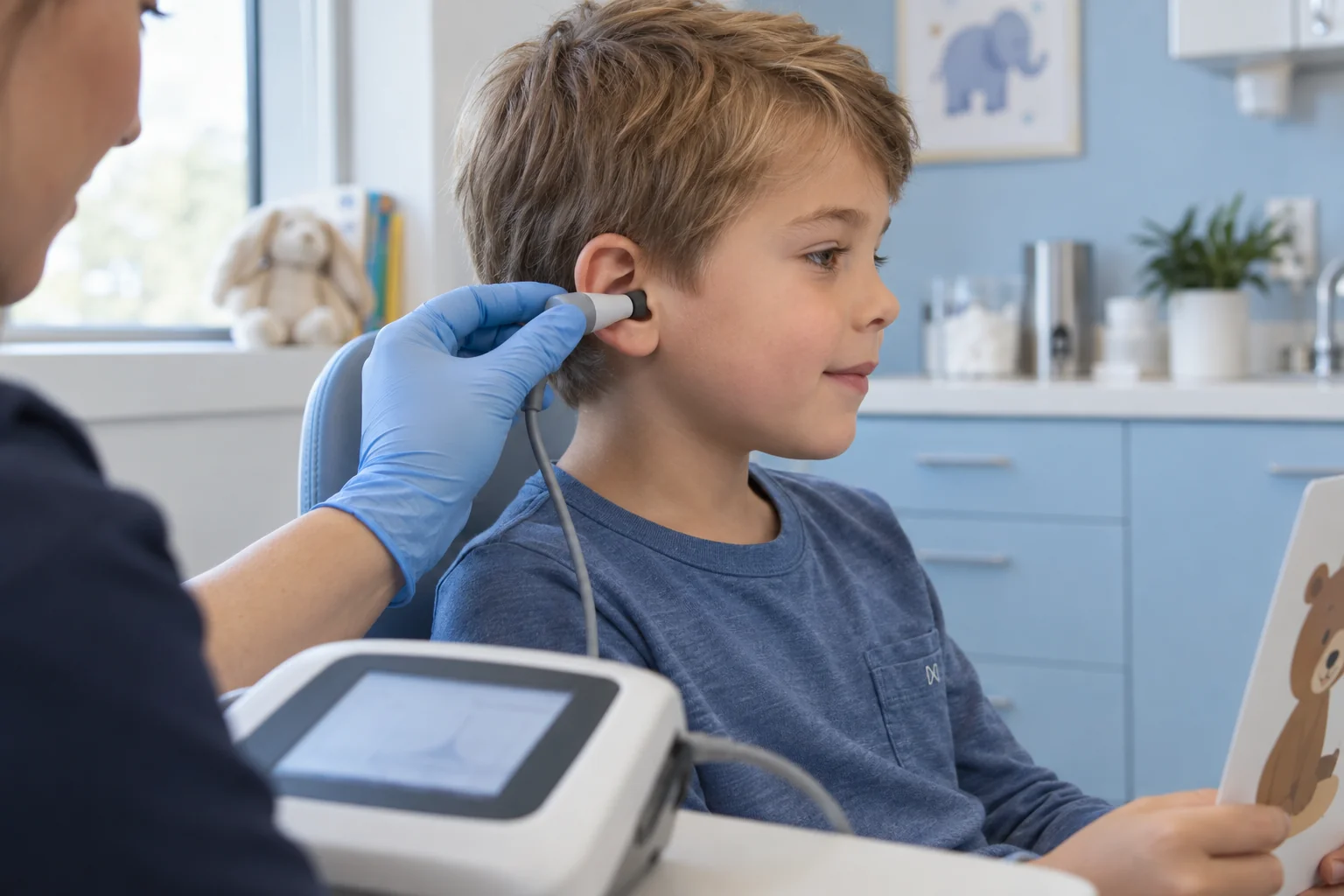
- Middle ear pressure testing (tympanometry) — quick and painless
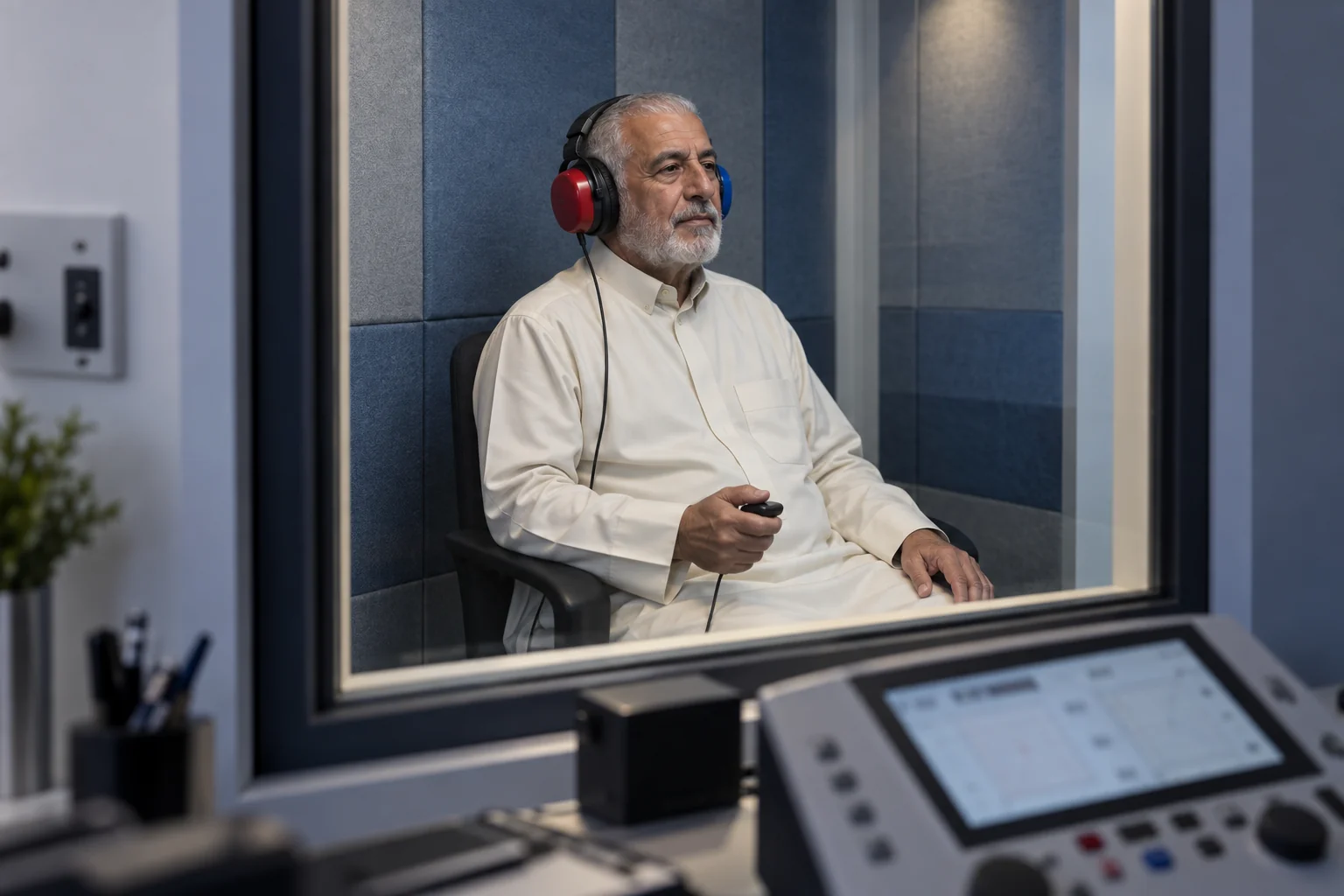
- A hearing test, especially if fluid persists
How is it treated?
Watchful waiting first
Most cases are monitored for 3 months, with a repeat examination.
Medications not recommended for this condition: antibiotics, steroids, decongestants, and antihistamines — none help the fluid resolve.
Ventilation tubes
May be recommended if fluid persists in both ears for 3 months or more with hearing loss or an effect on speech or schooling, or with recurrent infections. Adenoid removal may be done at the same time for some children.
What are ventilation tubes?
Very small tubes placed in the eardrum that allow air into the middle ear and prevent fluid buildup. Hearing usually improves immediately after the procedure.
How is the procedure performed?
- Performed under general anesthesia in children, taking only minutes.
- The child usually goes home the same day.
- There are no external incisions.
- The tubes usually fall out on their own within 6 to 18 months, and the eardrum heals.
After the procedure
- A small amount of blood-tinged discharge may appear in the first few days.
- The child usually returns to normal activity and school within a day or two.
- Bathing and light swimming are usually fine without earplugs, unless the doctor advises otherwise.
If discharge occurs with the tubes in place
This is common and usually means a mild infection. It's typically treated with ear drops prescribed by the doctor and rarely needs oral antibiotics.
- Gently clean discharge from outside the ear.
- Use only the prescribed drops.
Follow-up
Keep follow-up appointments with the doctor until the tubes fall out and hearing and eardrum health are confirmed.
When should I see a doctor?
- If you notice reduced hearing or delayed speech in your child.
- If ear infections recur.
- If discharge continues for more than a week despite drops, with tubes in place.
- If a tube falls out and hearing remains reduced.
Go to the emergency room if you notice:
- Swelling or redness behind the ear
- Weakness of the facial muscles
- High fever with severe headache or unusual drowsiness
Remember
- Middle ear fluid is common and usually resolves on its own.
- Medications don't help treat it.
- Reduced hearing or delayed speech needs evaluation.
- Tubes are a simple procedure that quickly improves hearing.
This information is for health awareness and education, and does not replace a doctor's consultation or direct medical assessment.
Prepared by: Saudi Society of Otolaryngology–Head & Neck Surgery · Version 1.0 · Last reviewed: May 2026 · saudiorl.com