
- Content version
- 1.0
- Last scientific review
- مايو 2026
What are head and neck tumors?
Tumors that arise in the mouth, tongue, throat, larynx, nose and sinuses, salivary glands, or thyroid gland.
When detected early, the chances of cure are much higher, and treatment is simpler with fewer effects.
Warning signs
See a doctor if any of these signs persist for more than 3 weeks:
- A mouth or tongue sore that won't heal
- A white or red patch in the mouth
- Hoarseness
- Difficulty or pain swallowing
- A neck lump
- Pain in one ear with a normal examination of that ear
- One-sided nasal obstruction or bleeding
- Swelling of the cheek, jaw, or in front of the ear
- Loosening of teeth without a clear cause
- Unexplained weight loss
What are the risk factors?
- Tobacco in all its forms: cigarettes, shisha, e-cigarettes, and smokeless/chewing tobacco, which are strongly linked to mouth cancer.
- Alcohol, which greatly increases risk when combined with smoking.
- Human papillomavirus (HPV): linked to tonsil and base-of-tongue tumors.
- Prolonged sun exposure: for lip and skin tumors.
- Poor oral and dental hygiene, and broken teeth that continuously injure the tongue.
- Age: risk increases after age 40, but tumors can also affect younger people.
How is it diagnosed?
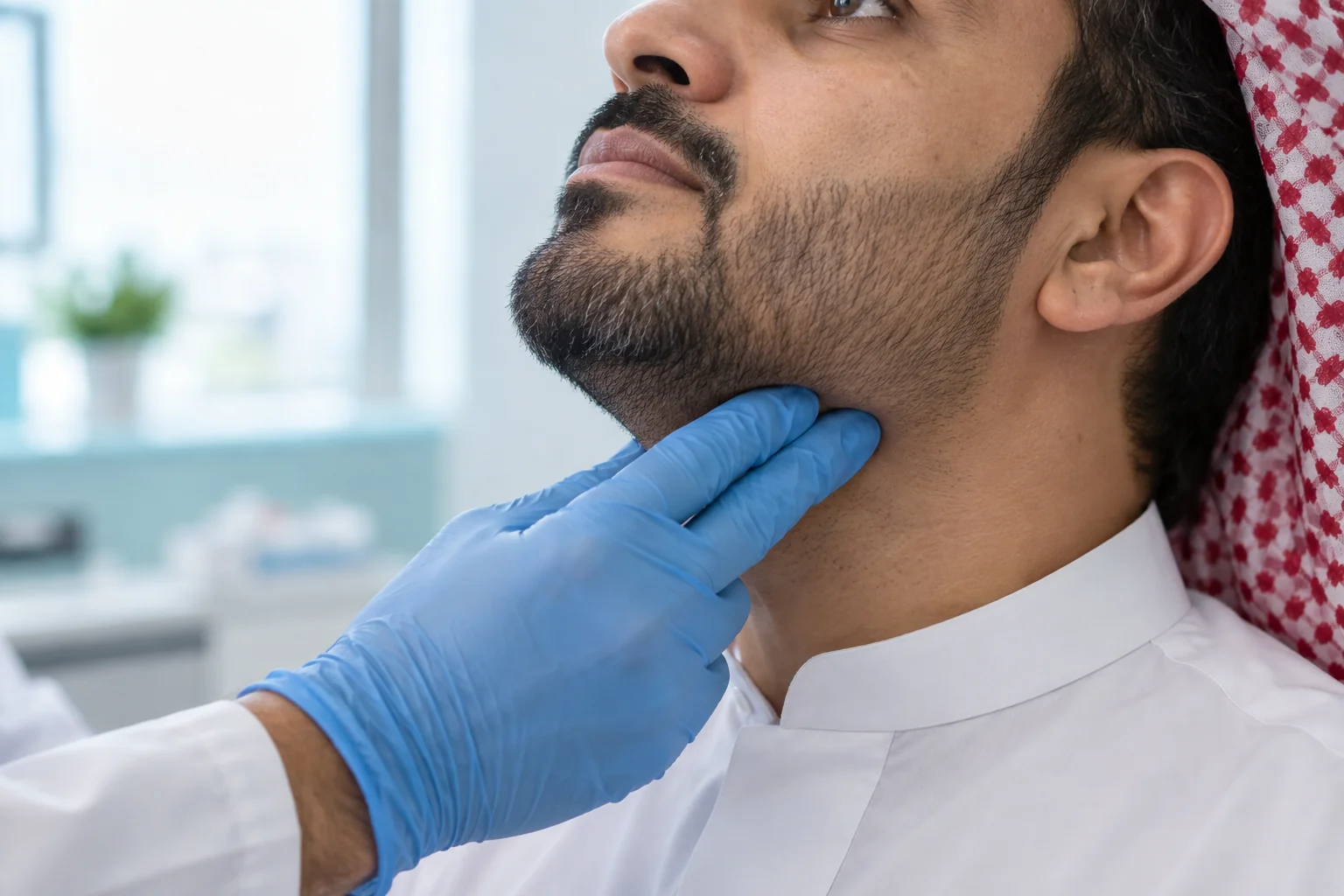
- Careful examination of the mouth and neck.
- Endoscopic examination of the nose, throat, and larynx in the clinic.
- Biopsy of the suspicious area.
- CT or MRI imaging to determine the extent of the tumor.
How is it treated?
Multidisciplinary medical teams develop the treatment plan, which depends on the tumor's location, stage, and the patient's condition. It may include:
- Surgery, including reconstructive surgery to restore form and function
- Radiation therapy
- Chemotherapy or immunotherapy
Treatment also includes rehabilitation for swallowing and speech, nutrition, and psychological support.
How do I protect myself?
- Quit smoking and smokeless tobacco. This is the single most important step. The Ministry of Health's smoking cessation clinics offer free support — you can call 937 for information.
- Self-examine your mouth in the mirror every month.
- Visit your dentist regularly.
- Ask your doctor about the HPV vaccine.
- Use sun protection on your lips.
- Maintain a healthy diet rich in vegetables and fruits.
Who needs more regular screening?
- Smokers and users of shisha or smokeless tobacco.
- Anyone with white or red patches in the mouth.
- Anyone previously treated for a head and neck tumor.
- Anyone with a persistent warning sign.
Go to the emergency room immediately if:
- Difficulty breathing or a whistling sound on inhaling appears
- You cannot swallow your saliva
- Heavy bleeding occurs from the mouth, nose, or throat
Remember
- Any warning sign lasting more than 3 weeks needs examination.
- Early detection raises the chances of cure.
- Quitting tobacco in all its forms is the most important prevention method.
- Most symptoms have simple causes, but an exam gives peace of mind.
This information is for health awareness and education, and does not replace a doctor's consultation or direct medical assessment.
Prepared by: Saudi Society of Otolaryngology–Head & Neck Surgery · Version 1.0 · Last reviewed: May 2026 · saudiorl.com