- Content version
- 1.0
- Last scientific review
- مايو 2026
Why does a child's hearing matter?
Children learn to speak through hearing. So even mild hearing loss can lead to delayed speech and language development and poor school performance.
Early detection and treatment give a child the best chance for normal speech development.
Newborn hearing screening
A quick, painless hearing screening is performed for newborns in the Kingdom. If you're asked to repeat the test, don't delay it.
Goals: screening before 1 month of age, diagnosis before 3 months, and starting treatment before 6 months.
What causes hearing loss in children?
- Genetic factors, more common with consanguineous marriage
- Premature birth and NICU admission
- Severe jaundice after birth
- Certain infections during pregnancy or after birth, such as meningitis
- Middle ear fluid — the most common cause of temporary hearing loss
Passing the newborn screening doesn't guarantee hearing will remain normal forever. Hearing loss can appear later, so watch your child's speech development.
Signs that need evaluation
- Age 2–4 months: doesn't notice or startle at loud sounds.
- Age 6 months: doesn't turn toward the source of a sound.
- Age 12 months: doesn't babble, doesn't respond to their name.
- Age 18 months: doesn't say single words.
- Age 2 years: doesn't combine two words together.
- Age 3 years: speech isn't understandable to most people.
Speech delay has many causes besides hearing loss, such as developmental disorders or autism spectrum conditions. But a hearing test is a fundamental step in evaluating any child with delayed speech.
How is a child's hearing tested?
Age-appropriate tests are available, and a child's hearing can be tested from birth.
- Tests that measure the ear's or hearing nerve's response while the infant sleeps
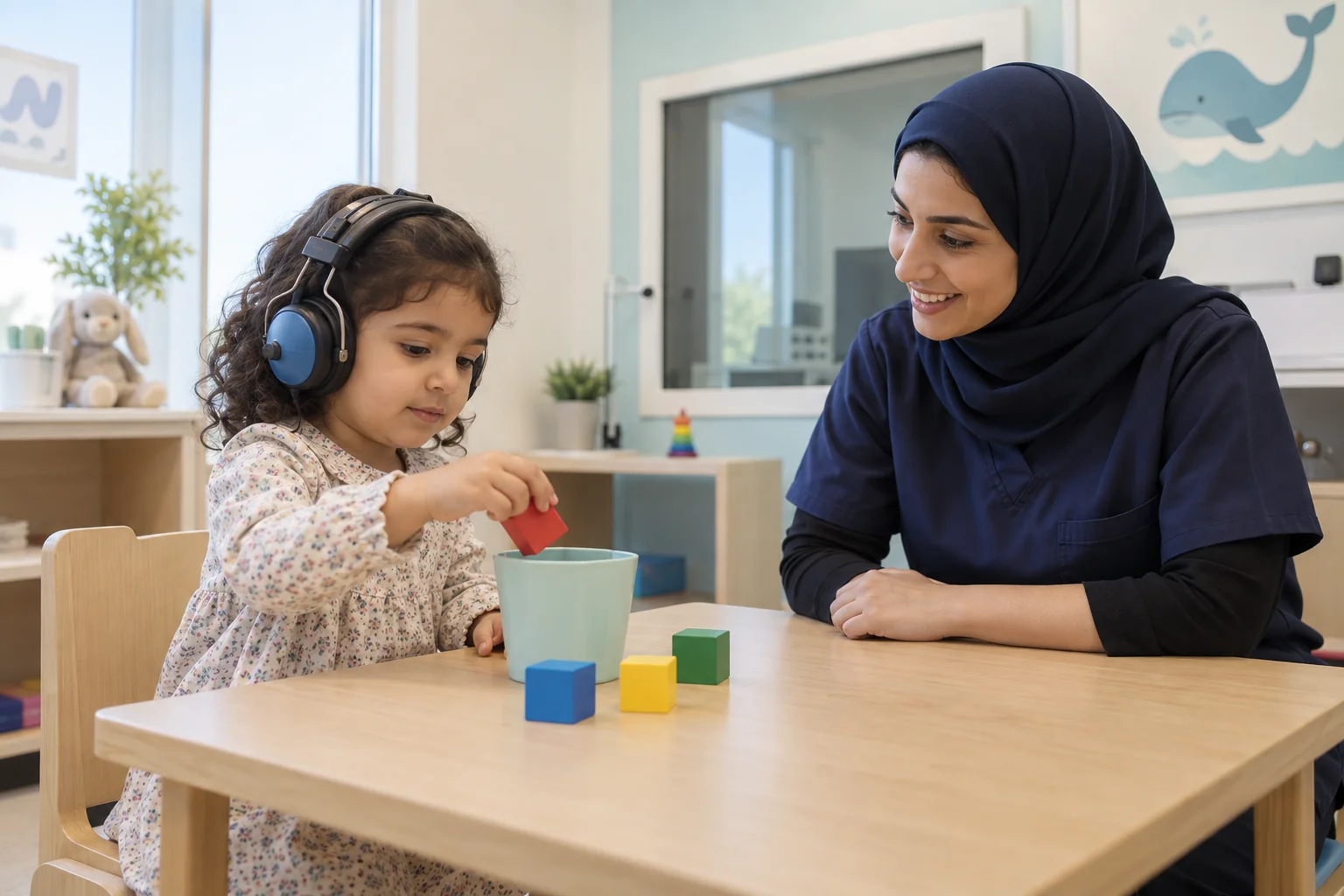
- Play-based and sound-response tests for older children
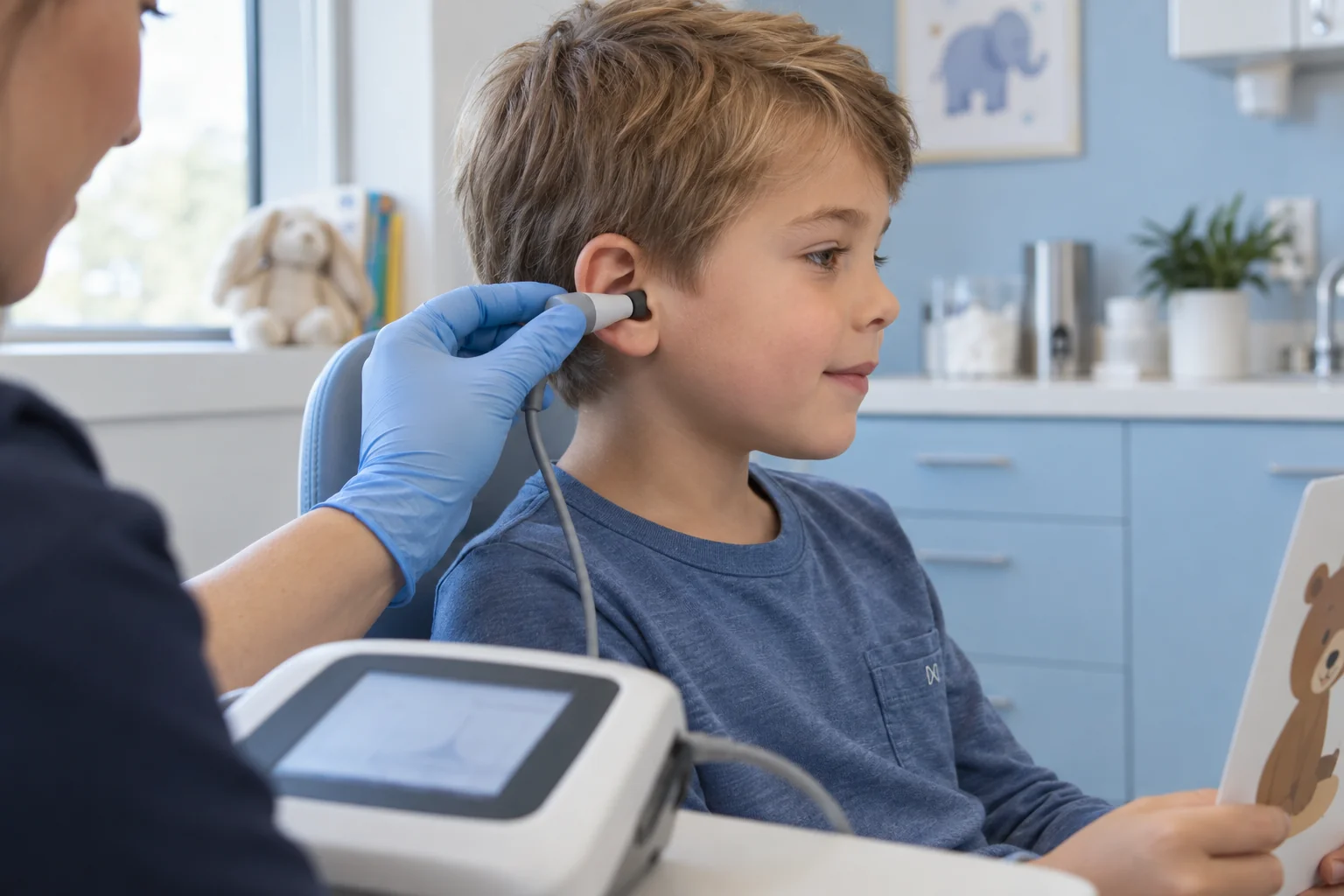
- Middle ear pressure testing to detect fluid
What are the treatment options?
- Ventilation tubes: when there's persistent fluid in the middle ear.
- Hearing aids: can be fitted for infants from the first months of life.
- Cochlear implants: for severe hearing loss, with the best outcomes when done early.
- Speech and language therapy: an essential part of the plan.
How can I help my child?
- Talk with your child often, and read stories to them daily.
- Face your child while speaking, and speak clearly.
- Limit screen time, especially before age 2.
- Ensure the hearing aid is worn during all waking hours if prescribed.
- Inform the school of your child's condition so they can sit near the front.
When should I have my child's hearing tested?
- If they didn't pass the newborn hearing screening.
- If there's a family history of childhood hearing loss.
- If you notice any of the delay signs listed above.
- If your child's speech regresses after they were previously speaking.
- After meningitis or a serious head injury.
- If ear infections recur or fluid persists behind the eardrum.
Don't wait
Any parental concern about a child's hearing or speech is reason enough to request a hearing test, regardless of the child's age.
Remember
- No child is too young for a hearing test.
- Repeat the hearing screening immediately if asked to.
- Speech delay warrants a hearing test.
- The earlier treatment begins, the better the outcomes.
This information is for health awareness and education, and does not replace a doctor's consultation or direct medical assessment.
Prepared by: Saudi Society of Otolaryngology–Head & Neck Surgery · Version 1.0 · Last reviewed: May 2026 · saudiorl.com