- Content version
- 1.0
- Last scientific review
- مايو 2026
What is otitis externa?
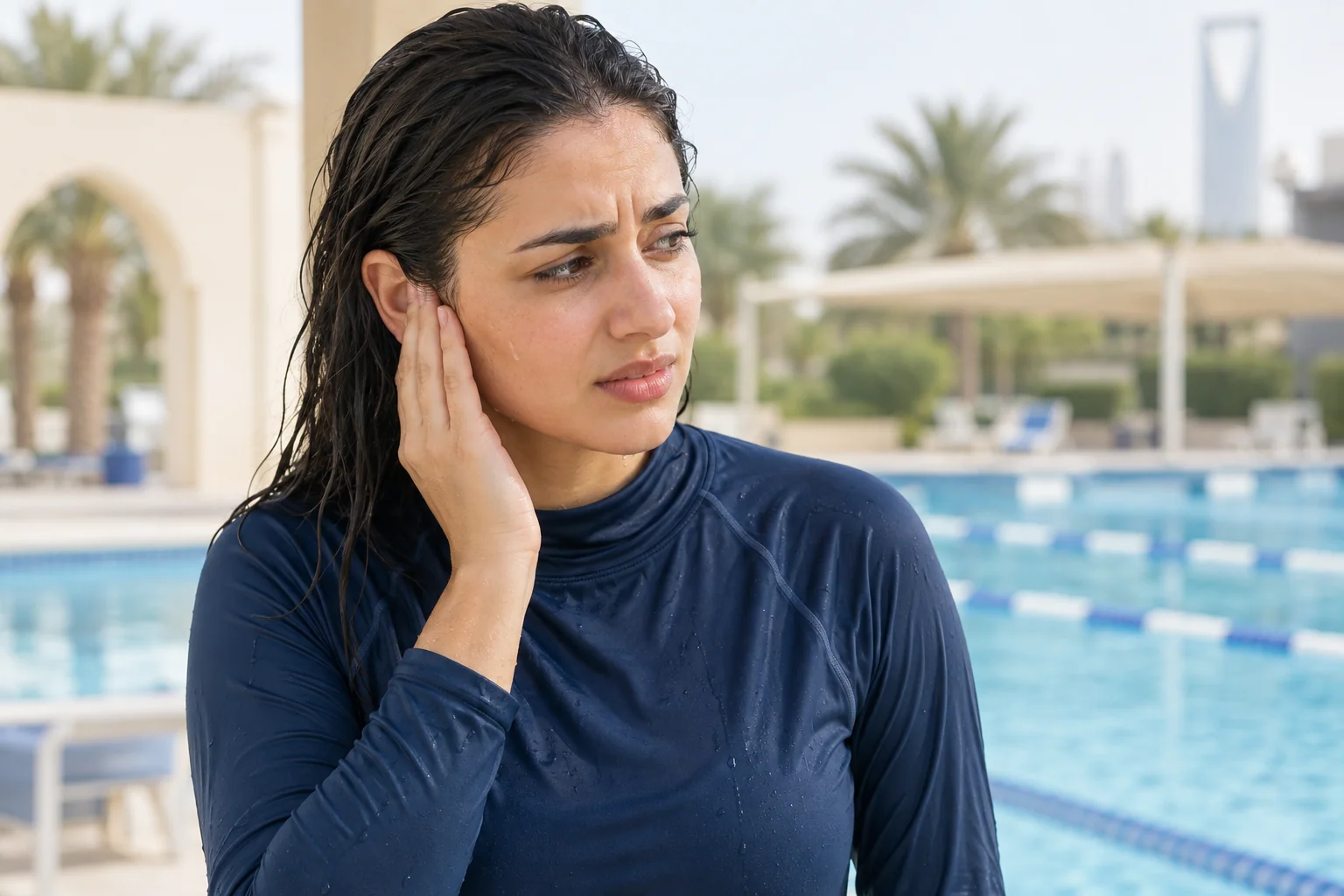
Inflammation of the skin of the outer ear canal, between the ear opening and the eardrum. It often occurs after water enters the ear or the canal's skin is scratched.
It differs from middle ear infection and is usually treated with ear drops, not oral antibiotics.
What are the symptoms?
- Ear pain that worsens when touched, pulled, or with chewing
- Itching in the ear canal
- Discharge from the ear
- Swelling of the canal and a feeling of blockage
- Temporary reduced hearing
What are the causes?
- Swimming and water remaining in the ear
- Humidity and sweating in hot weather
- Cleaning the ear with cotton swabs or tools
- Hearing aids and in-ear earphones
- Skin conditions, such as eczema
Fungal infection is common in hot, humid climates and causes severe itching and discharge, needing special drops and ear cleaning by a doctor.
How is it diagnosed?
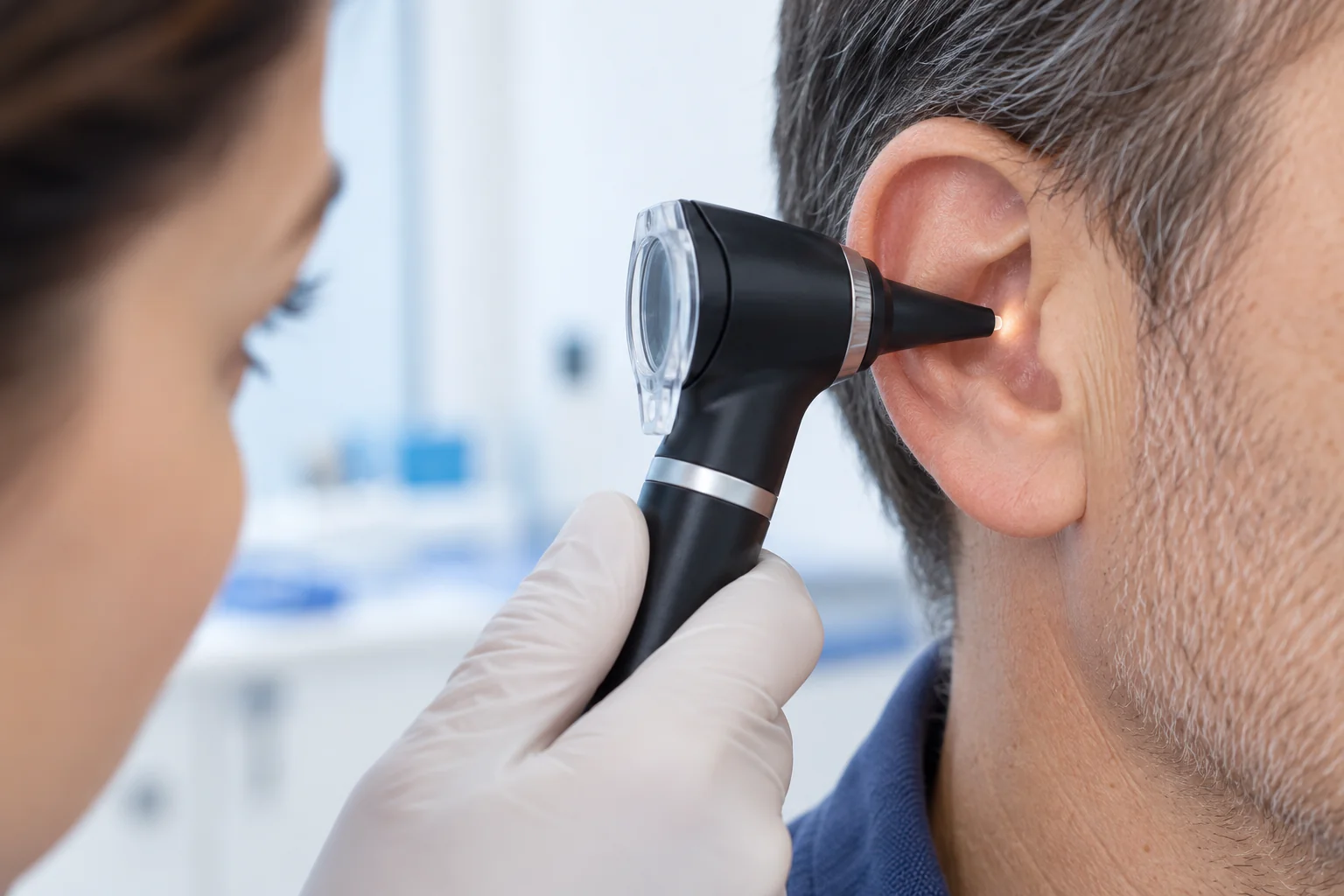
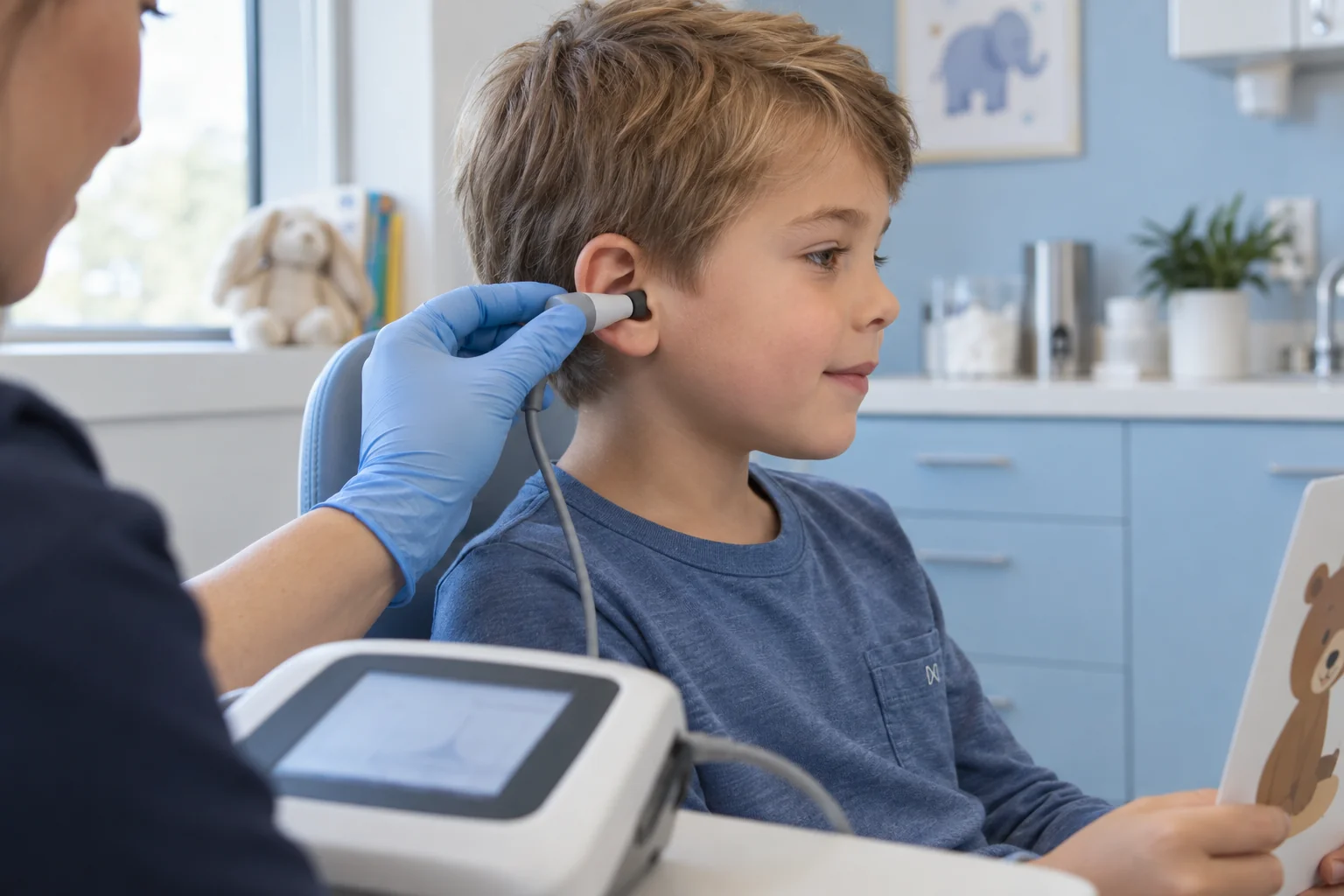
The doctor examines the ear with an otoscope and confirms the eardrum is intact. A swab of the discharge may be taken if the infection recurs or doesn't respond to treatment.
How is it treated?
- Ear drops prescribed by the doctor are the primary treatment.
- Cleaning the ear of discharge at the doctor's office so the medication can reach the skin.
- A wick may be placed by the doctor if the canal is very swollen.
- Pain relievers as needed.
- Most patients don't need oral antibiotics.
Be careful
Some ear drops aren't suitable for people with a perforated eardrum or ventilation tubes. Use only the drops prescribed for you.
How do I apply ear drops correctly?
- Warm the bottle in your hand for a minute or two.
- Lie on your side with the affected ear facing up.
- Gently pull the ear up and back (in children, down and back).
- Place the specified number of drops into the canal.
- Gently press the small cartilage flap in front of the ear opening several times to help the medicine enter.
- Stay lying down for 3 to 5 minutes.
Complete the full course of treatment even if symptoms improve.
During treatment
- Keep the ear dry, using a cotton ball coated with petroleum jelly while bathing.
- Avoid swimming until your doctor allows it.
- Don't use in-ear earphones.
How can I reduce recurrence?
- Tilt your head to drain water after swimming or bathing.
- Dry the outer ear with a towel, or a hair dryer on low setting held away from the ear.
- Use earplugs for swimming if infections recur.
- Don't insert cotton swabs into the ear.
When should I see a doctor?
- If pain worsens or doesn't improve within 2–3 days of treatment.
- If symptoms don't clear within one to two weeks.
- If the infection recurs.
- If you have diabetes or a weakened immune system, see a doctor early.
Go to the emergency room if:
- Redness and swelling extend to the face or neck
- Facial muscle weakness appears
- You have diabetes or are elderly, with severe persistent ear pain, or pain that worsens at night
- High fever appears with severe pain
Remember
- Ear drops are usually the main treatment.
- Keep the ear dry during treatment.
- Diabetic patients need early evaluation.
This information is for health awareness and education, and does not replace a doctor's consultation or direct medical assessment.
Prepared by: Saudi Society of Otolaryngology–Head & Neck Surgery · Version 1.0 · Last reviewed: May 2026 · saudiorl.com